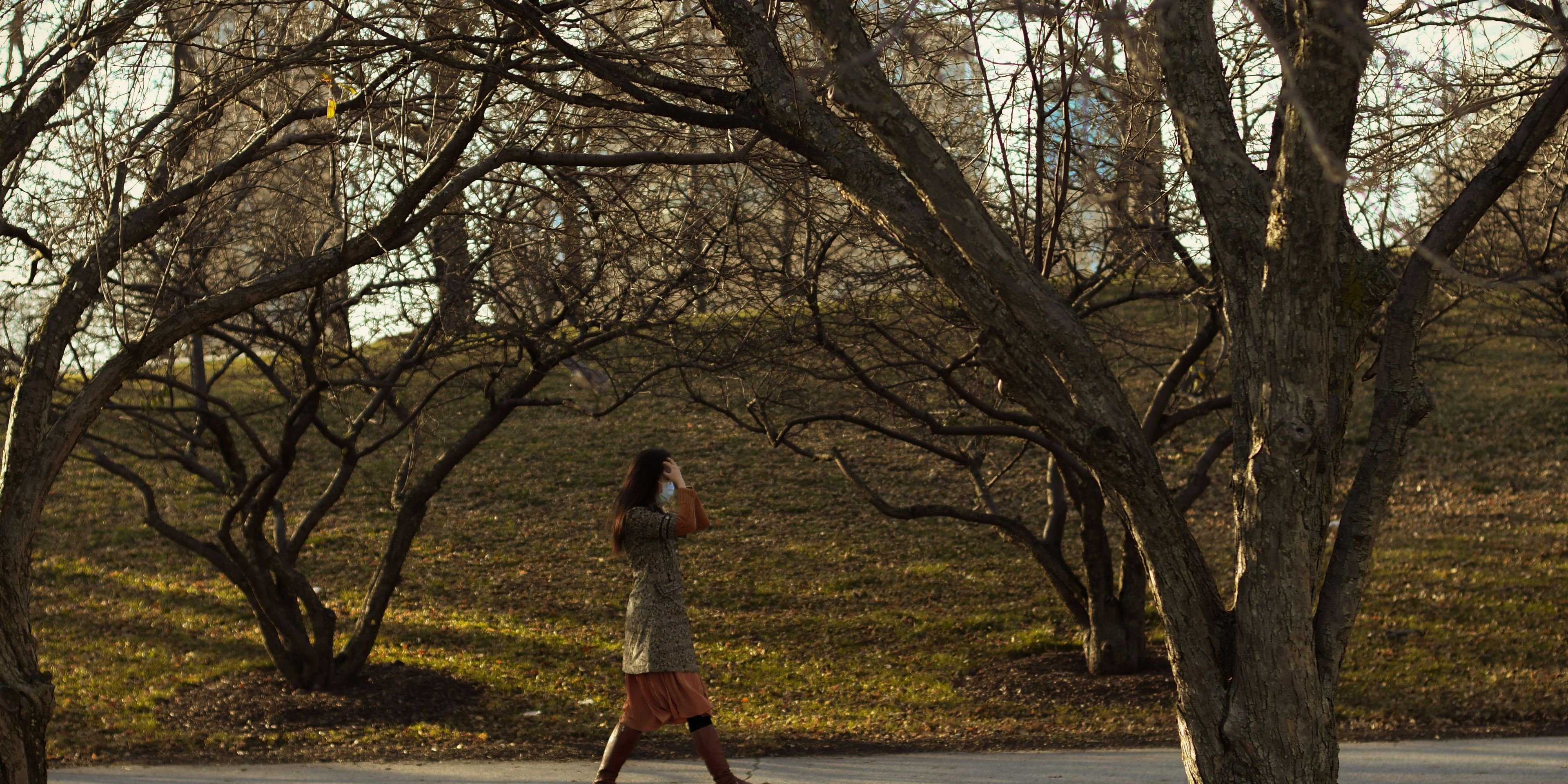
One of the most intimidating parts of the Duolingo English Test (DET) is the "Write About the Photo" task. You see an image, and you have exactly one minute to write a description.
For many students, the problem isn’t their English skills, it’s the panic that one minute flies by. You stare at the photo, your mind goes blank, and suddenly the timer is flashing red.
But here is the secret: You don’t need to be creative. You just need a system.
In this guide, we will break down a simple formula to help you write a high-scoring description for any photo, every single time.
How the Task is Scored
Before we look at the formula, you need to know what the AI grader is looking for:
- Grammatical Complexity: Are you using complex sentence structures, or just simple sentences?
- Lexical Sophistication: Are you using advanced vocabulary?
- Relevance: Does your text actually describe the image?
To get a high score, you need to write at least 3 sentences. Writing just one sentence, even if it is perfect, will likely result in a lower score.
The 3-Step Formula (The O.D.S. Method)
To ensure you always hit the 3-sentence mark with high-quality English, use the O.D.S. Method:
- Observation (General)
- Detail (Specific)
- Speculation (Inference)
Sentence 1: The Observation (The "Big Picture")
Don't start by describing a tiny detail like a shoe or a cloud. Start with the main theme. Use an introductory phrase to look professional.
- Template: "This image depicts [Main Subject] located in [Setting]."
- Example: "This image depicts a group of students gathering in a university library."
Sentence 2: The Detail (Zoom In)
Now, focus on specific actions, clothing, or the environment. Use spatial prepositions like in the foreground, in the background, or on the left.
- Template: "In the foreground, [Subject] is [Action], while [Secondary Subject] appears to be [Action]."
- Example: "In the foreground, a young woman is reading a thick textbook, while her friends appear to be discussing a project on a laptop."
Sentence 3: The Speculation (The Score Booster)
This is where you get extra points. The AI loves it when you use "modal verbs" (might, could, may) or express thoughts about why something is happening. This shows advanced language skills.
- Template: "It seems as though [Reason for action], or perhaps they are [Alternative reason]."
- Example: "It seems as though they are studying for upcoming final exams, as the atmosphere looks serious and focused."
Vocabulary Upgrades
To push your score from a 100 to a 130+, swap out basic words for descriptive ones.
- Don't say: "The picture shows..."
- Do say: "The image portrays..." or "The photograph captures..."
- Don't say: "They are happy."
- Do say: "They appear delighted and enthusiastic."
- Don't say: "It is a nice day."
- Do say: "The weather appears pleasant and sunny."
A Full Example
Let’s imagine a photo of a family eating dinner outside. Here is how we apply the formula:
- Observation: "The photograph captures a family of four enjoying a meal together in an outdoor garden setting."
- Detail: "On the table, there are various dishes and drinks, and the father is currently serving food to the children."
- Speculation: "They might be celebrating a special occasion, such as a birthday, because everyone looks cheerful and well-dressed."
Final Tips for Test Day
- Type fast, edit later: Don't stop to correct a spelling mistake immediately. Get your ideas down first.
- Keep it logical: Don't invent things that aren't there. If you don't see a dog, don't mention a dog.
- Punctuation matters: Ensure you capitalise the first letter of sentences and end with periods.
Mastering the "Write About the Photo" task is all about establishing a clear structure. Memorise the O.D.S. Method, and you will never freeze up when the timer starts!